{
“@type”: “Article”,
“image”: {
“url”: “https://csuxjmfbwmkxiegfpljm.supabase.co/storage/v1/object/public/blog-images/organization-1151/1764893433675_image_1764893433388.png”,
“@type”: “ImageObject”,
“description”: “Pest control technician inspecting North Texas home”
},
“author”: {
“url”: “https://pestico.biz”,
“name”: “Pestico”,
“@type”: “Organization”
},
“@context”: “https://schema.org”,
“headline”: “Why Regular Pest Control Matters for North Texas”,
“publisher”: {
“url”: “https://pestico.biz”,
“name”: “Pestico”,
“@type”: “Organization”
},
“inLanguage”: “en”,
“articleBody”: “Why regular pest control matters for North Texas homeowners and businesses. Learn health risks, pest types, local threats, and ongoing prevention.”,
“description”: “Why regular pest control matters for North Texas homeowners and businesses. Learn health risks, pest types, local threats, and ongoing prevention.”,
“datePublished”: “2025-12-05T00:11:03.379Z”
}
More than 36 percent of American households report dealing with pest problems each year. Living in North Texas means facing persistent threats from termites, mosquitoes, rodents, and more. These issues go beyond simple annoyance and can impact your health, property, and financial security. With so many myths about regular pest control, understanding proactive strategies gives homeowners crucial tools to protect their families and investments.
Table of Contents
- Defining Regular Pest Control and Common Myths
- Types of Pests Threatening North Texas Properties
- Health and Safety Impacts of Inadequate Control
- Economic Costs of Pest Infestations and Damage
- Long-Term Benefits of Scheduled Preventative Services
Key Takeaways
| Point | Details |
|---|---|
| Regular Pest Control is Proactive | It involves prevention, monitoring, and targeted intervention rather than just reactive measures against infestations. |
| Common Pests in North Texas | Major threats include cockroaches, termites, and mosquitoes, all of which pose health and structural risks. |
| Health Risks from Pests | Infestations can lead to serious health issues, including respiratory problems caused by pest-related debris. |
| Economic Implications | Proactive pest management is more cost-effective than addressing damages caused by established infestations. |
Defining Regular Pest Control and Common Myths
Pest control isn’t just about spraying chemicals when you see bugs. Regular pest control is a strategic, proactive approach to managing and preventing pest populations before they become significant problems. By understanding integrated pest management techniques, homeowners can protect their property more effectively and sustainably.
At its core, pest management involves a systematic process of prevention, monitoring, and targeted intervention. The Centers for Disease Control and Prevention describes this approach as a “science-based, common-sense strategy” that focuses on understanding pest behavior and ecology. This means identifying potential entry points, reducing attractive environments for pests, and implementing precise control measures that minimize unnecessary chemical exposure.
Contrary to popular myths, regular pest control isn’t about creating a sterile, chemical-saturated environment. Instead, it’s a balanced approach that prioritizes prevention and minimal intervention. Many homeowners mistakenly believe that pest control is only necessary when they see active infestations. However, preventative treatments can stop pest problems before they start, saving time, money, and potential property damage. Professional pest control services understand local North Texas pest patterns and can develop customized strategies that address specific regional challenges, from seasonal ant invasions to potential rodent migrations.
By debunking common misconceptions and adopting a holistic approach, North Texas residents can maintain healthier, more protected living spaces. Regular pest control isn’t an expense—it’s an investment in your property’s long-term integrity and your family’s comfort.
Types of Pests Threatening North Texas Properties
North Texas properties face a diverse array of pest challenges that can compromise structural integrity, health, and comfort. Local pest species range from tiny home invaders to more significant structural threats, each presenting unique risks to residential and commercial spaces.
According to national pest control experts, some of the most prevalent threats in the region include cockroaches, termites, and mosquitoes. Pest World research highlights these insects as particularly problematic, noting that cockroaches can spread bacteria and trigger allergies, while termites pose significant property damage risks. Mosquitoes represent an additional health concern, functioning as vectors for dangerous diseases like West Nile virus and Zika virus.
Beyond these primary threats, North Texas properties also contend with other persistent pest challenges. Rodents like mice and rats can infiltrate homes through tiny openings, contaminating food supplies and causing electrical and structural damage. Ants – particularly fire ants and carpenter ants – create additional complications, with some species capable of causing structural damage or delivering painful bites. Spiders, including potentially dangerous species like brown recluse and black widow, also inhabit the region, presenting both nuisance and health risks.
Understanding these pest varieties is crucial for effective prevention. By recognizing the specific threats native to North Texas, homeowners can develop targeted strategies to protect their properties, minimize potential damage, and maintain a safe, comfortable living environment.
Health and Safety Impacts of Inadequate Control
Pest infestations pose far more than just a nuisance problem for North Texas residents. Beyond the visible damage, these unwelcome visitors can create significant health risks that extend far beyond simple property maintenance. Integrated pest management strategies become critical in protecting both residential and commercial environments from these potential threats.

The Environmental Protection Agency warns that inadequate pest control can trigger serious health complications. Pests like cockroaches, rodents, and mosquitoes aren’t just unsightly – they’re disease vectors capable of spreading dangerous pathogens. Bacterial contamination, respiratory irritants, and vector-borne illnesses represent substantial risks that many homeowners underestimate. Cockroaches alone can spread multiple types of bacteria, while rodents can contaminate food supplies and living spaces with their droppings and urine.
Respiratory health stands at particular risk when pest populations go unchecked. Lung health research demonstrates that indoor pest populations can dramatically compromise air quality, exacerbating conditions like asthma and allergies. The microscopic debris from pest droppings, shed skin, and decomposing bodies can become airborne, creating invisible but dangerous particulate matter that triggers respiratory distress. Children, elderly residents, and individuals with pre-existing respiratory conditions remain especially vulnerable to these hidden environmental threats.
Effective pest control is fundamentally about protecting human health. By implementing systematic prevention strategies, North Texas residents can create safer, more hygienic living environments that minimize both immediate and long-term health risks associated with uncontrolled pest populations.
Economic Costs of Pest Infestations and Damage
Pest infestations represent a significant financial burden for North Texas property owners, often resulting in unexpected and substantial economic consequences. Pest control cost analysis reveals that proactive management is far more cost-effective than addressing extensive damage after an infestation takes hold.
Property damage from pest invasions can quickly escalate into thousands of dollars of repairs. Texas invasive species research highlights how challenging and costly pest eradication becomes once established, particularly with species that cause structural compromise. Termites alone create an estimated $5 billion in property damage annually across the United States, with North Texas being particularly vulnerable due to its warm, humid climate. Rodents can chew through electrical wiring, potentially causing fire hazards, while carpenter ants and beetles can compromise wooden structures, leading to extensive structural repairs.
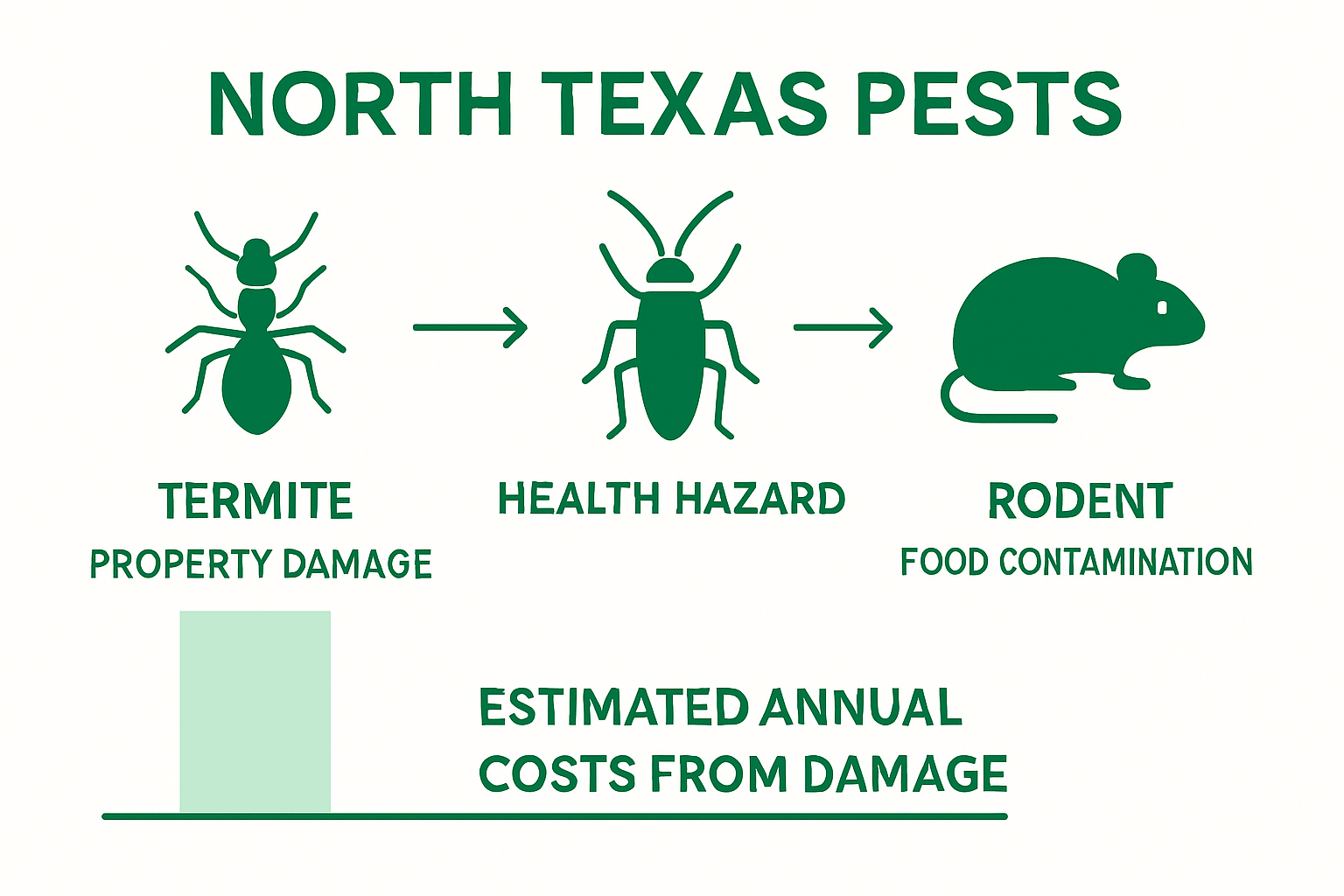
Beyond direct property damage, pest infestations create additional economic burdens through decreased property values, increased insurance premiums, and potential business interruptions. Restaurants, hotels, and retail spaces face particular risks, with potential health code violations and reputation damage that can result in significant financial losses. The cost of a single serious pest infestation can easily exceed the expense of years of preventative pest control treatments, making regular management a smart financial strategy.
For North Texas property owners, understanding these economic implications transforms pest control from an optional expense to a critical investment. Proactive, consistent pest management represents a cost-effective approach to protecting both residential and commercial properties from potentially devastating financial consequences.
Long-Term Benefits of Scheduled Preventative Services
Scheduled preventative pest control represents a strategic approach that goes far beyond occasional treatments. Local pest control benefits demonstrate how consistent management can transform property protection and peace of mind for North Texas residents.
The Centers for Disease Control highlights Integrated Pest Management as a science-based strategy that focuses on long-term prevention rather than reactive solutions. This approach means identifying potential pest entry points, understanding local pest behaviors, and implementing systematic strategies that address root causes of infestations. Regular scheduled services create a protective barrier that intercepts potential pest problems before they become significant threats, reducing the likelihood of extensive damage and costly repairs.
Environmental Protection Agency research confirms that reduced-risk treatment methods in preventative pest control provide substantial health and safety benefits. Consistent treatments help maintain a clean, pest-free environment by systematically reducing pest populations and minimizing potential disease transmission. For North Texas properties, this means protecting against region-specific threats like fire ants, mosquitoes, and termites that can pose significant health and structural risks.
Ultimately, scheduled preventative services represent an investment in property protection, health safety, and long-term peace of mind. By implementing a consistent pest management strategy, homeowners and businesses can create a proactive defense against potential infestations, ensuring a safer, more comfortable living and working environment.
Protect Your North Texas Home with Trusted Regular Pest Control
Facing the ongoing challenge of pests in North Texas requires more than occasional treatments. As the article highlights, unchecked infestations can lead to serious health risks, costly property damage, and long-term headaches. You deserve a pest control solution that understands local pest behaviors and focuses on preventative, eco-friendly management to keep your home or business safe and comfortable year-round.
At Pestico Pest Control, a family-owned company near Van Alstyne, we specialize in tailored services that address your specific needs. Our licensed experts provide comprehensive treatments for ants, termites, rodents, and other common pests with transparent pricing and no contracts. Discover how our proactive approach aligns with Integrated Pest Management principles by visiting Pestico Pest Control for details on our one-time and recurring pest control plans.
Take control before pests become a costly problem.

Schedule your first preventative service today and experience the peace of mind that comes from a pest-free environment. Learn more about our commitment to North Texas communities and why regular pest control matters at Pestico Pest Control. Protect your property and your family by acting now.
Frequently Asked Questions
What is regular pest control?
Regular pest control is a strategic, proactive approach to managing and preventing pest populations before they become significant problems, involving prevention, monitoring, and targeted intervention.
Why is it important to have preventative pest control treatments?
Preventative treatments stop pest problems before they start, saving time, money, and potential property damage, creating a healthier living environment.
What types of pests are common in North Texas?
Common pests in North Texas include cockroaches, termites, mosquitoes, rodents, and various ant species, each presenting unique challenges to properties.
How does inadequate pest control impact health?
Inadequate pest control can lead to serious health risks such as respiratory issues and the spread of diseases, as pests can carry harmful bacteria and trigger allergies.
Recommended
- Best Time For Pest Control In North Texas: Expert Advice For 2025 – Pest Control Van Alstyne, TX – Pestico Pest Control
- How Often Should Pest Control Be Done In Texas Homes? (2025) – Pest Control Van Alstyne, TX – Pestico Pest Control
- 2025 Home Pest Prevention Checklist For Texas Residents – Pest Control Van Alstyne, TX – Pestico Pest Control
- How Often Should Pest Control Be Done In Texas Homes? – Pestico: Pest Control Services Near Me | Van Alstyne, TX
- Master Seasonal Allergen Management for Your Business – Probe IT