
Preventing Rodent Entry
Rodents might look harmless but they can slip into Texas homes through openings as small as a pencil eraser. That means even a gap of just 1/4 inch is enough for a mouse to sneak inside. Most people focus on traps and baits and forget that the real secret is stopping them from getting in at all.
Table of Contents
- Identifying Common Rodent Entry Points
- Best Practices For Sealing Your Property
- Maintaining A Rodent-Free Environment
- When To Call A Professional Exterminator
Quick Summary
| Takeaway | Explanation |
|---|---|
| Seal all potential entry points. | Regularly inspect and seal gaps around foundations, utility entries, and roofs to prevent rodents from entering your home. |
| Use appropriate sealing materials. | Apply steel wool, caulk, and metal sheeting for small and large openings, ensuring they are rodent-proof and durable. |
| Maintain a clean outdoor environment. | Keep yards organized, remove debris, and trim grass to create an inhospitable environment for rodents outside your home. |
| Monitor for signs of infestation. | Conduct regular inspections for droppings, gnaw marks, and strange noises to catch rodent problems early before they escalate. |
| Call professionals for severe infestations. | Seek expert help to address significant rodent problems, ensuring thorough elimination and preventing future risks. |
Identifying Common Rodent Entry Points
Rodents are crafty creatures that can squeeze through incredibly small openings, making preventing rodent entry a critical task for Texas homeowners. Explore our comprehensive rodent removal tips to understand how these persistent pests find their way into your home.
Understanding Rodent Access Points
According to the Centers for Disease Control and Prevention, mice can infiltrate homes through openings as tiny as 1/4 inch (6 millimeters) – about the size of a pencil eraser. This shocking fact underscores the importance of thorough home inspection and sealing potential entry points. Common vulnerable areas include:
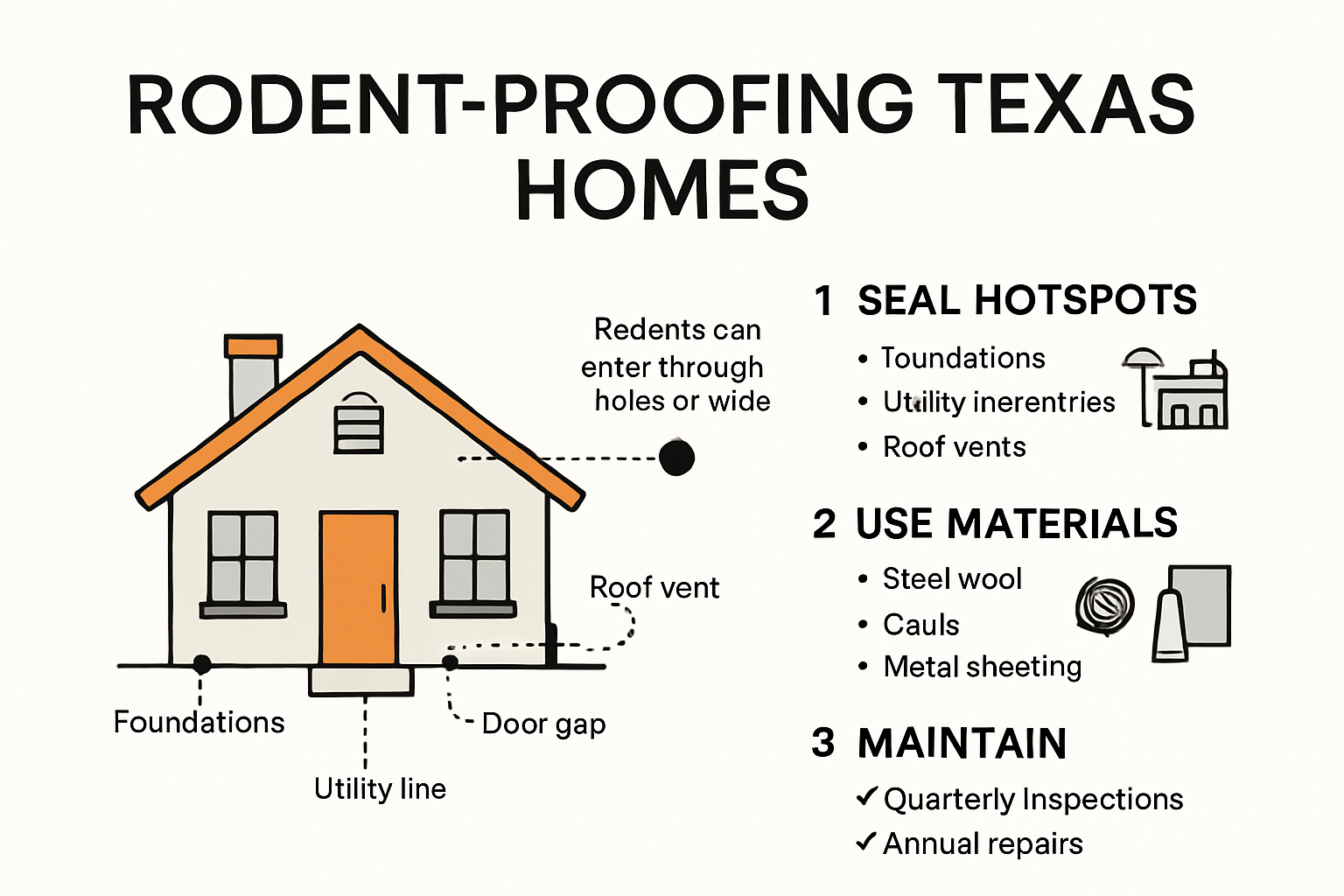
- Foundation Gaps: Cracks and holes around the home’s foundation provide easy access for rodents.
- Utility Line Entries: Spaces around pipes, electrical lines, and HVAC connections create natural pathways.
- Roof and Attic Vulnerabilities: Damaged roof vents, eaves, and roof edges offer alternative entry routes.
Detailed Inspection Strategies
The U.S. Environmental Protection Agency recommends a comprehensive approach to identifying potential rodent entry points. Homeowners should conduct a systematic exterior and interior inspection, paying close attention to:
- Examining the foundation for small cracks or holes
- Checking window and door frames for gaps
- Inspecting utility line entry points
- Reviewing roof and attic areas for potential openings
Professional pest control experts suggest using a flashlight and conducting inspections during daylight hours to spot even the smallest potential entry points. Look for signs of gnawing, greasy marks along walls, or small droppings that might indicate existing rodent pathways.
Materials for Effective Sealing
The University of California’s Integrated Pest Management Program recommends specific materials for effectively preventing rodent entry. Steel wool, caulk, metal sheeting, and hardware cloth are your best defenses against these persistent intruders. For smaller holes less than a quarter-inch, steel wool combined with caulk provides an excellent barrier. Larger openings require more robust solutions like metal screening or cement patches.
To help homeowners select the best materials for sealing rodent entry points, the table below compares key features, ideal uses, and notes for each recommended material mentioned in the article.
| Sealing Material | Best For | Key Features |
|---|---|---|
| Steel Wool + Caulk | Small openings (< 1/4 inch) | Chew-resistant, easy application |
| Metal Sheeting | Larger gaps, structural vulnerabilities | Durable, rodent-proof |
| Hardware Cloth | Vents and large entry points | Tough, allows airflow, chew-proof |
| Concrete/Cement Patches | Foundation cracks, major openings | Permanent, long-term solution |
| Expandable Foam | Irregular or hard-to-reach gaps | Fills awkward spaces, use with mesh |
Remember that thorough prevention is always more effective and cost-efficient than dealing with a full-blown rodent infestation. A proactive approach to identifying and sealing potential entry points can save homeowners significant time, money, and stress in the long run.
Best Practices for Sealing Your Property
Effective property sealing is the frontline defense against rodent invasions in Texas homes. Explore our comprehensive home pest prevention strategies to protect your living space from unwanted furry intruders.
Essential Sealing Materials and Techniques
According to the Centers for Disease Control and Prevention, selecting the right materials is crucial for preventing rodent entry. Professional pest control experts recommend a multi-layered approach to property sealing:
- Steel Wool and Caulk: Ideal for small openings less than a quarter-inch. The coarse texture of steel wool combined with caulk creates an effective barrier that rodents cannot chew through.
- Metal Sheeting and Hardware Cloth: Perfect for larger gaps and structural vulnerabilities. These materials provide a durable, chew-resistant solution for more significant entry points.
- Concrete and Cement Patches: Permanent solutions for foundation cracks and structural openings, ensuring long-term rodent prevention.
Comprehensive Property Inspection Strategies
The U.S. Environmental Protection Agency recommends a systematic approach to property sealing. Homeowners should conduct thorough inspections focusing on:
- Foundation perimeter checks for cracks and small holes
- Utility line entry points around pipes and electrical connections
- Window and door frame seals
- Roof and attic ventilation openings
- Garage door and exterior wall connections
Professional tip: Use a bright flashlight during daylight hours to spot even the most minor potential entry points. Pay special attention to areas with previous moisture damage or structural wear.
Advanced Sealing Techniques
The Illinois Department of Public Health emphasizes the importance of comprehensive sealing techniques. Beyond basic material application, homeowners should consider:
- Weatherstripping doors and windows
- Installing door sweeps
- Using expandable foam for irregular gaps
- Applying metal mesh over larger ventilation openings
- Regularly inspecting and maintaining property seals
Remember that rodent prevention is an ongoing process. Seasonal changes and natural home settling can create new potential entry points. Annual comprehensive inspections and proactive maintenance are key to keeping your Texas home rodent-free. Investing time and resources in proper property sealing not only prevents pest infestations but also protects your home’s structural integrity and your family’s health.
Maintaining a Rodent-Free Environment
Preventing rodent infestations requires more than just sealing entry points. Discover advanced rodent removal strategies to create a comprehensive defense against these persistent pests in your Texas home.
Strategic Food and Waste Management
According to Texas A&M AgriLife Extension, proper food storage and waste management are critical in maintaining a rodent-free environment. Rodents are primarily attracted to homes by accessible food sources and comfortable nesting areas. Homeowners should implement these key strategies:
- Airtight Food Storage: Use hard plastic or metal containers with tight-fitting lids for all pantry items.
- Garbage Control: Invest in rodent-proof garbage containers with secure lids and empty them frequently.
- Clean Eating Areas: Immediately clean up food spills and crumbs, especially in kitchen and dining areas.
- Pet Food Management: Store pet food in sealed containers and avoid leaving pet food out overnight.
Creating an Inhospitable Outdoor Environment
The National Pest Management Association recommends creating outdoor conditions that discourage rodent habitation. This proactive approach involves:
- Maintaining a clean and organized yard
- Removing potential nesting materials like leaf piles and wood stacks
- Keeping grass short and landscaping well-trimmed
- Eliminating standing water sources
- Storing firewood at least 20 feet from the house and elevated off the ground
Professional pest control experts emphasize that a well-maintained exterior significantly reduces the likelihood of rodent invasions. Regular yard maintenance creates a less attractive environment for these unwanted guests.
Regular Monitoring and Professional Inspection
The Centers for Disease Control and Prevention highlights the importance of ongoing vigilance in rodent prevention. Homeowners should develop a comprehensive monitoring strategy that includes:
Below is a checklist table summarizing regular tasks and monitoring strategies to help Texas homeowners maintain a rodent-free environment.
| Task or Strategy | How Often | Status (Done/To Do) |
|---|---|---|
| Professional pest inspection | Quarterly | |
| Self-inspection of entry points | Monthly | |
| Investigate signs of rodent activity | Immediately, as needed | |
| Maintain detailed pest control records | Ongoing | |
| Proactive property maintenance | Ongoing |
- Quarterly Professional pest inspections
- Monthly self-inspections of potential entry points
- Immediate investigation of any signs of rodent activity
- Keeping detailed records of previous pest control efforts
- Maintaining a proactive approach to home maintenance
Early detection is crucial in preventing full-scale rodent infestations. Watch for subtle signs like small droppings, gnaw marks, unusual pet behavior, or scratching sounds in walls and attics. These indicators can help you address potential rodent problems before they become significant infestations.

Remember that rodent prevention is an ongoing process. Consistent effort, regular maintenance, and a comprehensive approach are your best defenses against these persistent home invaders. By combining strategic prevention techniques with professional guidance, Texas homeowners can effectively protect their living spaces from rodent challenges.
When to Call a Professional Exterminator
Identifying the right moment to seek professional pest control assistance can save Texas homeowners significant time, money, and potential health risks. Learn about critical pest treatment indicators to make informed decisions about rodent control.
Recognizing Severe Rodent Infestation Signs
According to the University of Nebraska-Lincoln Extension, certain indicators signal that professional intervention is necessary. Homeowners should be alert to these critical warning signs:
- Frequent Rodent Sightings: More than occasional glimpses suggest a significant population.
- Extensive Droppings: Large quantities of droppings in multiple areas indicate an established colony.
- Structural Damage: Gnaw marks on walls, electrical wiring, and furniture suggest advanced infestation.
- Unusual Noises: Consistent scratching sounds within walls or attics during quiet hours.
- Distinctive Odors: Musky, ammonia-like smells signaling concentrated rodent presence.
Health and Safety Considerations
The Texas Department of Agriculture emphasizes that professional exterminators are crucial when rodent infestations pose potential health threats. Rodents can transmit numerous diseases and create significant health risks:
- Direct disease transmission through droppings and urine
- Potential contamination of food sources
- Risk of hantavirus and other serious health conditions
- Allergic reactions triggered by rodent dander
- Secondary infections from parasites carried by rodents
Professional pest control experts are trained to address these risks comprehensively, using specialized equipment and regulated treatment methods that protect both human and environmental health.
Professional Assessment and Long-Term Prevention
Beyond immediate infestation control, professional exterminators provide critical advantages:
- Comprehensive property inspection
- Customized treatment strategies
- Advanced identification of entry points
- Eco-friendly and targeted pest management
- Follow-up monitoring and prevention recommendations
While DIY methods might seem cost-effective initially, professional intervention ensures thorough rodent elimination and prevents future invasions. Experts understand local rodent behaviors specific to Texas environments and can implement more sophisticated control techniques.
Remember that early professional intervention can prevent extensive property damage and potential health risks. Trust licensed pest control professionals who understand the unique challenges of rodent management in Texas homes. Their expertise transforms temporary solutions into long-term protection for your living space.
Frequently Asked Questions
What are the common entry points for rodents in Texas homes?
Rodents can enter homes through very small openings, often as tiny as 1/4 inch, including foundation gaps, utility line entries, and roof or attic vulnerabilities.
What materials are effective for sealing rodent entry points?
Effective sealing materials include steel wool combined with caulk for small openings, metal sheeting for larger gaps, hardware cloth for vents, and concrete patches for foundation cracks.
How can I maintain a rodent-free environment outside my home?
To maintain a rodent-free outdoor environment, keep your yard clean and organized, remove potential nesting materials, trim grass regularly, eliminate standing water, and store firewood away from the house.
When should I consider calling a professional exterminator for a rodent problem?
You should consider contacting a professional exterminator if you notice frequent rodent sightings, extensive droppings, structural damage, unusual noises, or distinctive odors, as these can indicate a significant infestation that requires expert intervention.
Stop Rodents Before They Invade: Choose Texas Experts Who Care
Worried about rodents slipping through gaps in your home despite your best efforts? You are not alone. Many Texas homeowners face the real frustration of hidden entry points and the stress of watching rodent problems grow even after sealing and cleaning. The article explained how tiny openings and missed signs can turn into big headaches if not addressed with expert solutions and consistent follow up.

Take back control of your home and peace of mind with Pestico. Our family-owned team uses the most advanced sealing techniques and local know-how to keep rodents out for good. Visit Pestico Rodent Control to schedule your inspection and discover practical solutions designed for Texas families. Do not wait until a small problem becomes a full infestation. Act now for a secure and rodent-free home.
Recommended
- Ultimate Rodent Removal Tips To Jumpstart Your Pest Control
- Rodent Removal Tips – Pest Control Van Alstyne, TX – Pestico Pest Control
- Pest Control Basics – Pest Control Van Alstyne, TX – Pestico Pest Control
- 2025 Home Pest Prevention Checklist For Texas Residents – Pest Control Van Alstyne, TX – Pestico Pest Control