{
“@type”: “Article”,
“author”: {
“url”: “https://pestico.biz”,
“name”: “Pestico”,
“@type”: “Organization”
},
“@context”: “https://schema.org”,
“headline”: “Pest Control vs Extermination: What Texas Homeowners Need to Know 2025”,
“publisher”: {
“url”: “https://pestico.biz”,
“name”: “Pestico”,
“@type”: “Organization”
},
“inLanguage”: “en”,
“articleBody”: “Discover the real differences in pest control vs extermination for homeowners and businesses in Texas. Learn how to choose the best option in 2025.”,
“description”: “Discover the real differences in pest control vs extermination for homeowners and businesses in Texas. Learn how to choose the best option in 2025.”,
“datePublished”: “2025-07-08T06:02:45.065Z”,
“mainEntityOfPage”: “https://pestico.biz/pest-control-vs-extermination-texas”
}

Every year, Texas homeowners spend over 300 million dollars fighting pest infestations. That sounds like a battle you can win with quick extermination. Yet here is the twist. Long-lasting protection depends less on harsh chemicals and more on a smarter, prevention-first approach that tackles the root problem before pests even show up.
Table of Contents
- Understanding Pest Control And Extermination
- Key Differences: Methods And Long-Term Results
- Choosing The Right Solution For Texas Properties
- Cost, Safety, And Local Considerations In 2025
Quick Summary
| Takeaway | Explanation |
|---|---|
| Pest Control Focuses on Prevention | Pest control emphasizes long-term prevention and understanding the root causes of infestations, rather than solely eliminating pests like traditional extermination. |
| Holistic Approaches Are More Effective | Integrated Pest Management (IPM) combines various methods to reduce pest populations sustainably, addressing root causes instead of just symptoms. |
| Assess Property-Specific Risks | Homeowners should evaluate their properties for vulnerabilities and tailor pest management strategies to their unique ecological and structural conditions. |
| Consider Long-term Costs and Safety | Investments in preventive measures and eco-friendly methods can save homeowners money in the long run, while also protecting health and the environment. |
| Follow Local Regulations | Texas homeowners should choose licensed pest control providers to ensure compliance with safety regulations and the use of effective treatment methods. |
Understanding Pest Control and Extermination
Homeowners face numerous challenges when dealing with unwanted pests, and understanding the critical differences between pest control and extermination can make a significant impact on managing these troublesome invaders. While many people use these terms interchangeably, they represent distinct approaches to addressing pest problems.
The Fundamental Approach to Pest Management
Pest control is a comprehensive strategy that goes beyond simply eliminating pests. According to Integrated Pest Management principles, this approach focuses on long-term prevention and minimal environmental impact. Unlike traditional extermination methods, pest control aims to understand the root causes of pest infestations and implement sustainable solutions.
Biological pest control offers an innovative alternative to chemical interventions. Research from ecological experts demonstrates that using natural predators and environmentally friendly methods can effectively manage pest populations while preserving ecosystem balance. This approach is particularly valuable for homeowners concerned about chemical exposure and environmental impact.
Key Differences in Methodology
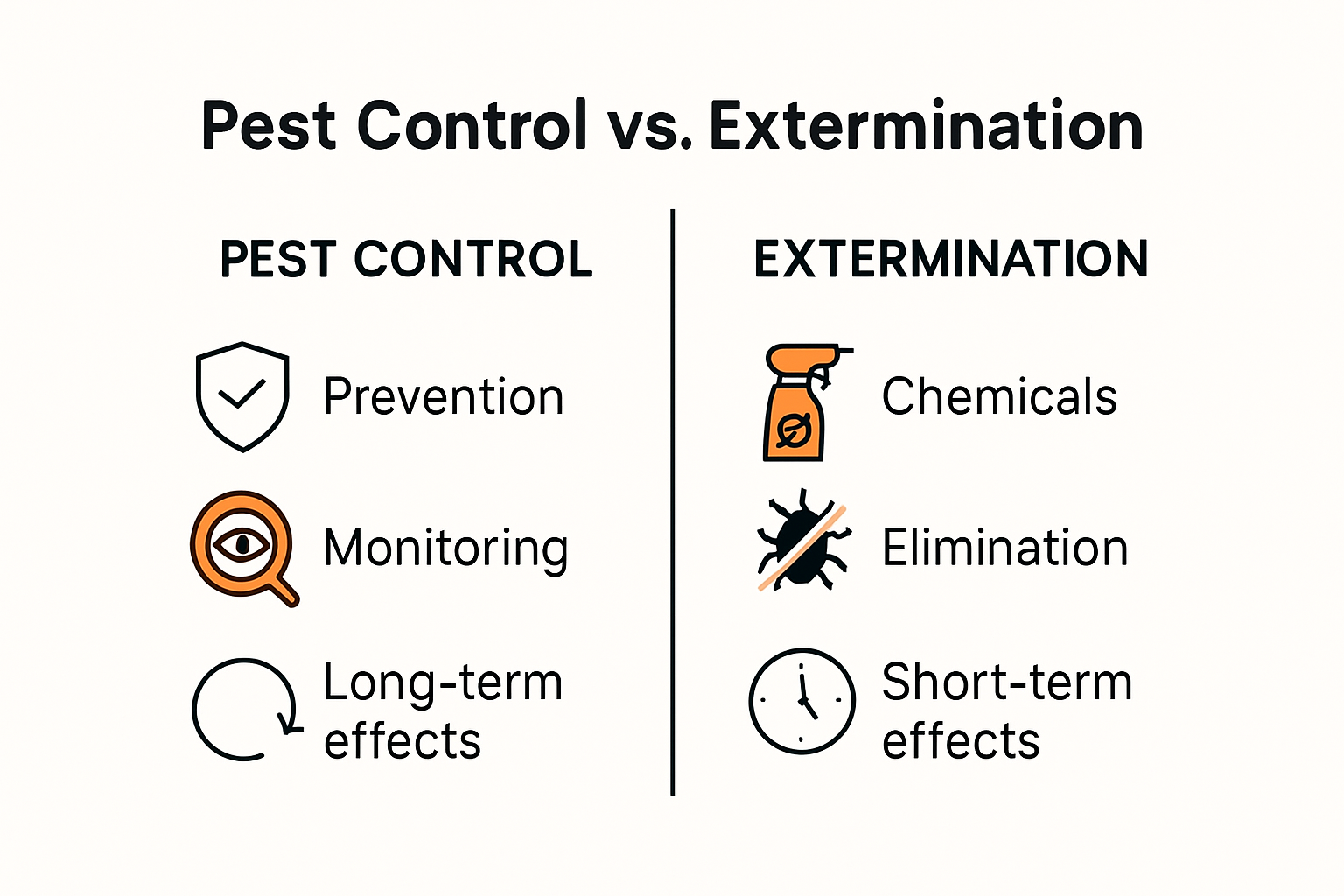
Extermination typically involves a more aggressive approach, focusing primarily on immediate pest elimination through chemical treatments. In contrast, pest control adopts a holistic strategy that includes:
- Prevention: Identifying and addressing potential entry points and conditions that attract pests
- Monitoring: Regularly assessing pest activity and potential risks
- Targeted Intervention: Using the least invasive methods to manage pest populations
Our comprehensive guide on pest control methods provides deeper insights into these nuanced approaches. Mechanical pest control further expands these strategies, utilizing physical methods like traps and barriers to manage pest populations without relying solely on chemical treatments.
The distinction becomes crucial for Texas homeowners. Environmental conditions in the region create unique challenges for pest management. Scorching summers and mild winters provide ideal breeding grounds for various pest species, making a strategic approach essential.
Understanding these differences empowers homeowners to make informed decisions. While extermination might offer a quick fix, pest control provides a more sustainable and comprehensive solution. The goal is not just to eliminate pests but to create an environment that naturally discourages their presence.
Homeowners should consider multiple factors when choosing between pest control and traditional extermination. Safety, long-term effectiveness, environmental impact, and cost are critical considerations. Expert insights on pest control safety can help homeowners make more informed decisions about protecting their homes and families.
Ultimately, the most effective pest management strategy combines preventative measures, targeted interventions, and ongoing monitoring. By understanding the nuanced differences between pest control and extermination, Texas homeowners can develop a more proactive and sustainable approach to managing unwanted pests.
To help clarify the differences between pest control and extermination, the following table compares their core methodologies and impacts for Texas homeowners:
| Aspect | Pest Control | Extermination |
|---|---|---|
| Approach | Prevention-first, holistic, addresses root causes | Focus on immediate pest elimination |
| Methods Used | IPM, biological, mechanical, monitoring, targeted | Chemical treatments, aggressive interventions |
| Long-term Effectiveness | High – aims to prevent future infestations | Often short-term, may require repeat treatments |
| Environmental Impact | Low – minimal chemicals, eco-friendly | Can be high due to pesticide use |
| Health Considerations | Safer for residents and pets | Higher risk of exposure to chemicals |
| Cost Over Time | Potentially lower with prevention and fewer recurrences | Often accumulates with repeated treatments |
Key Differences: Methods and Long-Term Results
Texas homeowners confronting pest challenges must understand the profound distinctions between traditional extermination and modern pest control approaches. The methodologies and long-term outcomes significantly impact not just immediate pest removal but overall property health and environmental sustainability.
Strategic Approaches to Pest Management
Traditional extermination primarily focuses on rapid pest elimination through widespread chemical applications. According to Environmental Protection Agency guidelines, this approach often overlooks critical prevention strategies that are fundamental to sustainable pest management.
Integrated Pest Management (IPM) represents a more sophisticated solution. Research from agricultural experts reveals that IPM strategies reduce pest populations by addressing root causes rather than merely treating symptoms. This comprehensive method combines multiple control techniques, minimizing environmental impact and long-term pest resilience.
Chemical Treatment vs. Holistic Intervention
Chemical treatments frequently create unintended consequences. Overreliance on pesticides can lead to significant challenges:
- Pest Resistance: Repeated chemical exposure enables pests to develop genetic adaptations
- Environmental Contamination: Indiscriminate pesticide use threatens local ecosystems
- Health Risks: Continuous chemical applications potentially expose residents to harmful substances
Our comprehensive pest control safety guide provides deeper insights into these critical considerations. The holistic approach prioritizes understanding pest behavior, identifying vulnerabilities, and implementing targeted interventions.
The long-term effectiveness of pest management strategies becomes particularly crucial in Texas. Unique regional environmental conditions create complex pest dynamics. Scorching summers and diverse ecosystems demand sophisticated, adaptive approaches that go beyond traditional extermination methods.
Professional pest control experts recognize that successful management requires continuous monitoring and adaptive strategies. Rather than viewing pest control as a one-time event, modern approaches treat it as an ongoing process of prevention, assessment, and targeted intervention.
Economically, the holistic approach often proves more cost-effective. While traditional extermination might seem less expensive initially, repeated treatments and potential property damage can significantly increase long-term expenses. Preventing pest infestations through comprehensive strategies ultimately saves homeowners considerable time and money.
Understanding these nuanced differences empowers Texas homeowners to make informed decisions. The goal extends beyond mere pest elimination to creating resilient, sustainable living environments that naturally resist pest intrusions.
Ultimately, successful pest management is not about aggressive elimination but strategic prevention. By embracing comprehensive, environmentally conscious approaches, homeowners can protect their properties more effectively and sustainably.
Choosing the Right Solution for Texas Properties
Selecting the most appropriate pest management strategy for Texas properties requires careful consideration of multiple factors. The unique environmental conditions and diverse pest challenges in the region demand a nuanced approach that goes beyond one-size-fits-all solutions.
Assessing Property-Specific Pest Risks
Texas homeowners face a complex landscape of pest challenges. Research from the USDA Home Pest Management Program demonstrates that targeted, localized approaches can significantly reduce pest populations and minimize environmental impact.
Key considerations for property assessment include:
- Structural Vulnerabilities: Identifying potential entry points and structural weaknesses
- Local Ecosystem: Understanding regional pest species and their behavior
- Property Age and Construction: Recognizing how building materials and age impact pest susceptibility

Comprehensive Evaluation Strategies
Professional pest management begins with a thorough property evaluation. According to Environmental Protection Agency guidelines, homeowners should consider:
- Detailed property inspection
- Identification of specific pest threats
- Customized treatment recommendations
Our guide to affordable pest control options provides additional insights into making cost-effective decisions that protect your property.
Texas properties present unique challenges due to diverse environmental conditions. Scorching summers, mild winters, and varied landscapes create ideal breeding grounds for multiple pest species. Scorpions, fire ants, mosquitoes, and rodents pose significant threats that require specialized approaches.
The most effective pest management strategy combines multiple elements:
- Preventative maintenance
- Regular professional inspections
- Targeted treatment protocols
- Ongoing monitoring and adaptation
Homeowners should prioritize solutions that offer long-term protection rather than temporary fixes. This approach not only addresses immediate pest concerns but also prevents future infestations.
Economic considerations play a crucial role in pest management decisions. While initial costs matter, the potential expenses of untreated pest problems can far exceed preventative investments. Structural damage, health risks, and repeated treatments can create significant financial burdens.
Professional pest control experts recommend a holistic approach that considers:
- Property-specific risk assessment
- Environmentally responsible methods
- Long-term prevention strategies
- Minimal chemical intervention
The property assessment process for pest risks is vital for effective management. The following table summarizes the checklist of what Texas homeowners should evaluate when assessing their property’s vulnerability to pests:
| Assessment Area | What to Evaluate |
|---|---|
| Structural Vulnerabilities | Entry points, cracks, gaps, foundation issues |
| Local Ecosystem | Common regional pest species, attractants |
| Property Age & Construction | Aging materials, moisture issues, insulation |
| Landscape Features | Overgrown vegetation, standing water, debris |
| Sanitation Practices | Food storage, waste management, cleanliness |
| Historical Pest Issues | Previous infestations, recurring trouble spots |
Ultimately, the right pest management solution for Texas properties combines scientific expertise, local knowledge, and customized strategies. By understanding the unique challenges of their specific location, homeowners can develop effective, sustainable approaches to pest control that protect their property and health.
Cost, Safety, and Local Considerations in 2025
As Texas homeowners navigate the complex landscape of pest management in 2025, understanding the intricate balance between cost, safety, and local regulatory requirements becomes increasingly critical. The evolving pest control industry demands a sophisticated approach that addresses multiple interconnected factors.
Financial Considerations and Value Assessment
Pest management investments extend far beyond immediate treatment costs. Economic research indicates that comprehensive prevention strategies can save homeowners significant expenses in potential property damage and repeated treatments.
Key financial considerations include:
- Direct Treatment Costs: Immediate service expenses
- Preventative Maintenance: Long-term investment in property protection
- Potential Damage Prevention: Avoiding costly structural repairs
Our affordable pest control options guide offers insights into balancing cost-effectiveness with comprehensive protection.
Safety and Regulatory Compliance
Texas maintains stringent regulations for pest control services. According to Texas Administrative Code, professional pest control providers must meet specific licensing requirements across multiple service categories.
Safety considerations for homeowners include:
- Chemical Exposure: Minimizing potential health risks
- Environmental Impact: Choosing eco-friendly treatment methods
- Professional Certification: Verifying technician qualifications
The landscape of pest management continues to evolve, with 2025 bringing increased emphasis on sustainable and health-conscious approaches. Technological advancements and environmental awareness drive innovative solutions that prioritize both effectiveness and safety.
Local environmental factors play a crucial role in pest management strategies. Texas properties face unique challenges from diverse ecosystems, extreme temperatures, and specific regional pest populations. Homeowners must consider location-specific risks when developing pest control plans.
Professional pest management services now offer more comprehensive packages that integrate:
- Detailed property assessments
- Customized treatment protocols
- Ongoing monitoring and prevention
- Environmentally responsible solutions
Economic considerations remain paramount. While initial investments might seem substantial, the long-term benefits of professional pest management far outweigh potential costs of untreated infestations. Property value preservation, health protection, and structural integrity are critical factors.
Texas homeowners should prioritize providers who demonstrate:
- Comprehensive local expertise
- Transparent pricing
- Proven safety protocols
- Environmentally conscious approaches
Ultimately, the most effective pest management strategy combines scientific expertise, local knowledge, and a forward-thinking approach. By carefully evaluating cost, safety, and local considerations, homeowners can develop robust pest control solutions that protect their properties and families in 2025 and beyond.
Frequently Asked Questions
What is the difference between pest control and extermination?
Pest control focuses on long-term prevention and reducing pest populations sustainably, while extermination primarily targets immediate pest elimination through chemical treatments.
How can I effectively prevent pest infestations in my Texas home?
Preventing pest infestations involves regular property assessments, sealing entry points, maintaining cleanliness, and using integrated pest management practices that combine various control strategies.
Are chemical pest treatments safe for my family and pets?
While some chemical treatments can pose risks, many pest control services offer eco-friendly options and follow safety regulations to minimize exposure for residents and pets. Always consult with a licensed pest control provider for safe practices.
What factors should I consider when choosing a pest control provider in Texas?
When selecting a pest control provider, consider their local expertise, safety protocols, licensing, customer reviews, and the comprehensiveness of their services, including prevention and ongoing monitoring.
Ready to Leave Pest Problems Behind for Good? Discover Local Solutions That Really Work
Have you had enough of quick extermination fixes that just do not last? The article made it clear Texas homeowners face unique pest risks year after year, and that prevention-focused, holistic pest control is the real solution. At Pestico, we help families like yours achieve peace of mind by going beyond simple chemical treatments. We use modern Integrated Pest Management, regular monitoring, and property-specific prevention to stop pests before they cause costly damage or health worries. Better yet, as a family-owned local business, we know exactly what Texas homes really need—even in the toughest seasons.

Why wait until pests strike again? Visit Pestico Home now to schedule your professional inspection and get advice tailored to your property. If you want affordable, environmentally responsible pest control that keeps your home safe all year, start with our affordable pest control options and see why local families trust us for lasting results. Choose ongoing prevention and say goodbye to recurring pests—your home deserves it!
Recommended
- Top Signs You Need Pest Treatment: Texas Homeowner Guide 2025 – Pest Control Van Alstyne, TX – Pestico Pest Control
- What Is Pest Control? Essential Guide For Texas Homeowners 2025 – Pest Control Van Alstyne, TX – Pestico Pest Control
- Are Pest Control Safe? What TX Homeowners & Businesses Need To Know In 2025 – Pest Control Van Alstyne, TX – Pestico Pest Control
- Affordable Pest Control Options For Texas Homeowners In 2025 – Pest Control Van Alstyne, TX – Pestico Pest Control
- Pest Control Costs Explained: 2025 Guide For Texas Homeowners – Pest Control Van Alstyne, TX – Pestico Pest Control
- Eco-Friendly Pest Control Methods For Texas Homes In 2025 – Pest Control Van Alstyne, TX – Pestico Pest Control
Knowing the differences between pest control and exterminators is important for homeowners. This article looks at both options.