
Texas homes face a big threat from termites, and these pests cause more than $5 billion in property damage each year nationwide. Most people worry about obvious warning signs like chewed-up wood, but termites are experts at hiding in places you rarely look. The real surprise is that spotting one tiny mud tube or a few discarded wings can mean you already have a full-blown colony lurking unseen in your walls.
| Takeaway | Explanation |
|---|---|
| Look for mud tubes | Mud tubes are crucial indicators of termite activity, often found where soil meets wood surfaces. |
| Check for hollow wood sounds | Tapping wood should reveal hollow sounds, suggesting internal damage caused by termites. |
| Inspect for discarded wings | Discarded wings near windows signal potential termite swarming, indicating nearby colonies. |
| Focus on high-risk areas | Indoor inspections should prioritize areas near moisture and wood, like bathrooms and kitchens. |
| Hire professionals for severe signs | If extensive damage or mud tubes are found, consult experts for a thorough inspection and treatment plan. |
Termite infestations can silently devastate your home before you even realize they are present. Understanding the early warning signs is crucial for protecting your property from extensive damage. Homeowners need to be vigilant and recognize the subtle indicators that these destructive pests might be lurking within your walls, foundation, or wooden structures.
Termites create distinctive mud tubes as protective passageways between their underground colonies and food sources. Learn more about termite detection strategies to safeguard your property. According to the University of Florida Entomology Department, these mud tubes are typically about the width of a pencil and can be found along foundation walls, crawl spaces, and other wooden structural elements. These tubes serve as critical transportation routes for subterranean termites, allowing them to move between their underground nest and wooden food sources while maintaining necessary moisture levels.
When inspecting your home, look for these mud tubes in areas where soil meets wooden structures. They might appear brown or dark in color and can be easily mistaken for dirt or debris. If you discover these tubes, it is a strong indication of an active termite infestation that requires immediate professional assessment.
Termite damage often goes unnoticed until significant structural compromise occurs. Homeowners should pay attention to wood that sounds hollow when tapped. This acoustic signal suggests that termites have been consuming wood from the inside out, leaving only a thin veneer of wood or paint. When you knock on wooden surfaces and hear a hollow or papery sound, it could indicate extensive internal damage.
Visible wood damage might include blistered or darkened wooden areas, unexplained cracks, or wood that appears to be bubbling or peeling. These signs suggest that termites have been actively feeding and potentially compromising the structural integrity of your home. Pay special attention to wooden window frames, door frames, baseboards, and areas where wood contacts the ground.

Another critical sign of termite presence is the discovery of discarded wings. During mating seasons, reproductive termites (called swarmers) fly out to establish new colonies. After their brief flight, these termites shed their wings, which you might find near windowsills, door frames, or on floors. The presence of these small, translucent wings indicates that a termite colony is nearby and potentially looking to expand.
Swarm seasons typically occur in spring and early summer, when environmental conditions are most favorable for termite reproduction. If you notice multiple discarded wings or witness a termite swarm, it is a clear signal that a mature colony exists near your home and professional intervention is necessary.
Understanding these signs is only the first step. Prompt detection and professional treatment can prevent devastating and costly damage to your property. Regular inspections and proactive monitoring are your best defense against these silent destroyers.
Termite inspections require a systematic approach that covers both indoor and outdoor areas of your property. Learn about comprehensive termite detection strategies to protect your home effectively. Understanding where and how to thoroughly examine your property can help you catch potential infestations before they cause significant damage.
Indoor termite inspections demand meticulous attention to specific zones where these destructive pests are most likely to establish themselves. According to the Texas Administrative Code, homeowners should focus on several key interior spaces. Priority areas include plumbing zones such as bathrooms, kitchens, and laundry rooms where moisture can attract termites. Window and door frames, baseboards, flooring, walls, and ceilings require careful examination for subtle signs of infestation.
Pay special attention to areas with potential wood contact or moisture. Inspect around fireplaces, near utility entries, and along interior walls where wooden structures might connect. Look for unexplained cracks, soft or hollow-sounding wood, and any discoloration that might indicate termite activity. Remember that termites often remain hidden, so even minor changes in wood texture or unexpected sounds could signal their presence.
The exterior of your home provides critical insights into potential termite risks. The U.S. Environmental Protection Agency recommends comprehensive outdoor inspections that go beyond simple visual checks. Examine your foundation carefully, looking for mud tubes, wood-to-ground contact, and areas where soil meets structural elements. Inspect weep holes, slab edges, and any wooden structures like porches, decks, or exterior steps.
Landscape management plays a crucial role in termite prevention. The University of Florida’s Institute of Food and Agricultural Sciences suggests maintaining at least 6 inches of clearance between soil and wall sidings. Keep firewood stacked away from your home, remove wooden debris from the property, and ensure proper drainage to reduce moisture accumulation. Trim landscape plants to maintain at least 2 feet of distance from exterior walls, preventing direct access routes for termites.
While thorough personal inspections are valuable, professional termite inspections provide comprehensive assessments that homeowners might miss.
Trained professionals use specialized tools and knowledge to detect early signs of infestation in areas that are typically challenging to examine. They can access and inspect crawl spaces, interior wall cavities, and other hard-to-reach zones that might harbor termite colonies.
Professional inspectors understand the nuanced signs of termite activity and can differentiate between active and historical infestations. They will provide detailed reports documenting potential risks, recommend targeted treatment strategies, and help you develop a proactive prevention plan. Given the potential for extensive structural damage, investing in periodic professional inspections can save significant repair costs in the long term.
Here is a comparison table summarizing the differences between DIY termite inspections and professional inspections, helping homeowners decide which approach is best for their situation.
| Aspect | DIY Inspection | Professional Inspection |
|---|---|---|
| Required Tools/Equipment | Basic tools (flashlight, screwdriver, moisture meter) | Specialized tools, advanced technology |
| Areas Accessible | Common areas, visible zones | Hard-to-reach, concealed spaces |
| Expertise Level | Homeowner knowledge | Trained, certified experts |
| Depth of Inspection | Surface-level, visible signs | Comprehensive, in-depth |
| Ability to Identify Infestation | Subtle/early signs may be missed | Can identify active and historical infestations |
| Documentation/Reports | Personal notes, photos | Detailed, professional reports |
| Recommended For | Routine checks, prevention | Confirmed or suspected infestations, complex cases |
Remember, termite detection is not a one-time event but an ongoing process of vigilance and proactive management. Regular inspections, both personal and professional, combined with preventative maintenance, offer the best defense against these destructive pests.
Protecting your Texas property from termite damage requires proactive and strategic self-inspection techniques. Explore our comprehensive termite inspection guide to understand the critical elements of effective home monitoring. Homeowners can significantly reduce potential termite risks by implementing regular, thorough inspection practices.
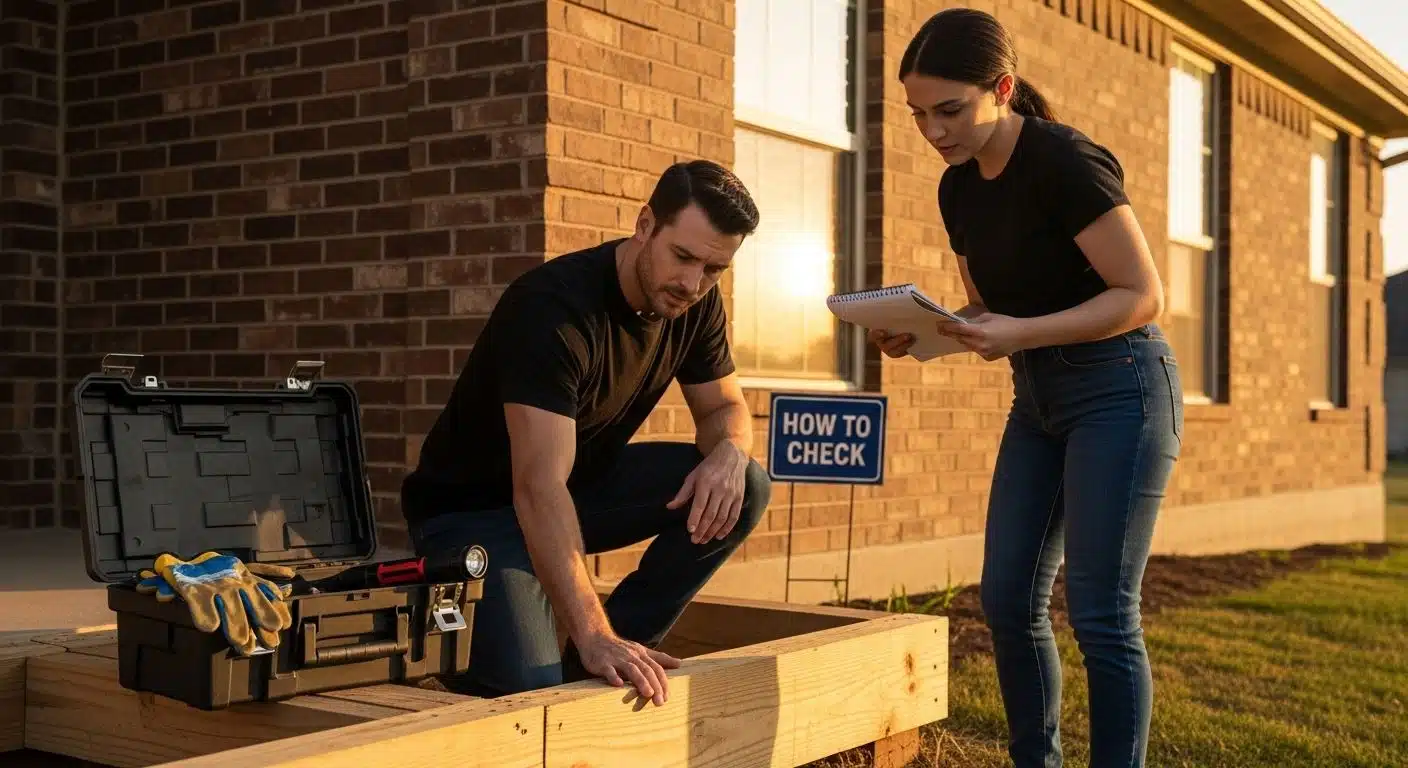
Before beginning your DIY termite inspection, gather specific tools that will enhance your ability to detect potential infestations. According to the University of Florida Entomology and Nematology Department, key inspection equipment includes a strong flashlight, screwdriver, moisture meter, and protective gloves. A sturdy ladder will help you access hard-to-reach areas like attics and crawl spaces. Wear comfortable clothing that allows for easy movement and consider wearing a dust mask to protect yourself from potential debris.
Prepare a systematic inspection checklist before starting. Document each area you plan to examine, including specific zones like baseboards, foundations, wooden structures, and areas around plumbing.
Below is a summary checklist of essential DIY termite inspection tasks and tools mentioned for Texas homeowners. Use this table to ensure you are fully prepared before and during your inspection.
| Inspection Task / Tool | Status (✓/✗) | Notes |
|:———————————–|::————:|:——————————-|
| Gather strong flashlight | | For visibility in dark areas |
| Obtain screwdriver | | For tapping wood and probing |
| Use moisture meter | | Identify damp zones |
| Wear protective gloves/clothing | | Safety during inspection |
| Use sturdy ladder | | Reach attics, crawlspaces |
| Prepare inspection checklist | | Stay systematic |
| Document with photographs | | Track changes, provide evidence |
| Inspect near plumbing/moisture | | Bathrooms, kitchens, laundry |
| Examine wood structures outdoors | | Fences, decks, siding |

Take photographs of any suspicious areas for future reference and comparison. This documentation can help track potential changes over time and provide valuable evidence if professional intervention becomes necessary.
Effective termite detection requires a methodical approach that goes beyond casual observation. Begin your inspection in areas most susceptible to termite activity such as wooden structures near ground contact, basement perimeters, and zones with high moisture levels. Tap wooden surfaces with a screwdriver or hammer, listening for hollow sounds that might indicate internal damage. Look for subtle signs like mud tubes, wood discoloration, and unexplained cracks.
Pay special attention to seasonal variations in termite behavior. Spring represents a critical period when termite colonies become most active, making it an ideal time for comprehensive property inspections. Check wooden fence posts, deck supports, and exterior wooden structures for signs of infestation. Use a moisture meter to identify areas with excessive humidity, as termites are attracted to damp environments. Examine wooden surfaces for tiny holes, bubbling paint, or unexplained wood damage that could signal termite presence.
While DIY inspections are valuable, they cannot completely replace professional expertise. If you discover multiple signs of potential termite activity or feel uncertain about your findings, consulting a professional termite inspector becomes crucial. Professional termite treatment experts can provide comprehensive assessments that go beyond surface-level inspections.
Recognize your limitations and understand when professional intervention is necessary. Complex infestations often require specialized equipment and expert knowledge to fully assess and address. Signs that warrant immediate professional consultation include extensive mud tube networks, significant wood damage, multiple swarm evidence locations, or persistent moisture issues that could attract termites.
Remember that consistent, thorough inspections are your primary defense against potential termite damage. By dedicating time to systematic property monitoring and staying informed about termite behavior, Texas homeowners can protect their most significant investment from these destructive pests. Regular inspections combined with proactive maintenance strategies offer the most effective approach to long-term termite prevention.
Termite infestations can escalate quickly, transforming from a minor concern to a significant structural threat. Learn about comprehensive termite control strategies to understand the critical moments when professional intervention becomes essential. Recognizing the right time to seek expert help can save homeowners substantial time, money, and potential structural damage.
Certain indicators demand immediate professional attention. According to the University of Maryland Extension, homeowners should contact a pest control professional if they observe dirt tunnels or ‘shelter tubes’ on the foundation, soil packed in structural cracks, piles of insect wings, or noticeable structural weaknesses. The U.S. Environmental Protection Agency emphasizes that licensed pest control companies possess the necessary expertise and specialized equipment to effectively address termite challenges.
Key red flags include extensive mud tube networks spanning more than a few inches, multiple locations of wood damage, significant structural compromises, or discovering multiple termite colonies in different areas of your property. Blistered wood paneling, unexplained hollow sounds in wooden structures, and persistent moisture issues near wooden elements are additional warning signs that professional assessment is crucial. These symptoms suggest a potentially widespread infestation that requires specialized diagnostic and treatment approaches.
Some termite situations are inherently too complicated for DIY solutions. The University of California’s Integrated Pest Management Program recommends professional intervention when infestations involve removing infested wood, eliminating complex moisture problems, or implementing targeted pesticide treatments. Professionals bring specialized knowledge about different termite species prevalent in Texas, understanding their unique behavioral patterns and most effective eradication strategies.
Complex scenarios might include historic homes with intricate wooden structures, properties with extensive underground networks, or situations involving multiple interconnected buildings. Professional inspectors use advanced technologies like thermal imaging, moisture meters, and specialized detection equipment to map out the full extent of termite activity. They can provide comprehensive treatment plans that address not just the immediate infestation but also long-term prevention strategies tailored to your specific property characteristics.
A professional termite inspection goes far beyond a simple visual assessment. Experts conduct thorough evaluations that include detailed property mapping, moisture analysis, wood density testing, and comprehensive documentation. They will identify not just current infestations but potential risk zones that could attract future termite colonies.
Professional inspectors provide detailed reports outlining the extent of damage, recommended treatment protocols, and preventative measures specific to your property’s unique characteristics. They can implement targeted treatments such as baiting systems, liquid treatments, and structural modifications that effectively interrupt termite colonies’ reproductive and feeding cycles. Moreover, many professional services offer warranties and follow-up inspections, providing homeowners with ongoing protection and peace of mind.
Ultimately, while DIY inspections are valuable, they cannot replace the comprehensive expertise of trained professionals. Investing in professional termite control is a proactive approach to protecting your most significant asset your home. By recognizing the signs and acting promptly, Texas homeowners can mitigate potential damage and ensure their property remains termite-free.
Common signs include visible mud tubes on walls, hollow-sounding wood when tapped, discarded wings near windows, and visible wood damage such as blistering or bubbling paint.
To perform a DIY inspection, gather tools like a flashlight, screwdriver, and moisture meter. Check critical areas such as plumbing zones, window frames, and outdoor structures for signs of infestation.
You should call a professional if you notice extensive mud tubes, significant wood damage, or if you’re uncertain about signs of infestation. Professionals can conduct thorough inspections and provide effective treatment plans.
Essential tools for a termite inspection include a strong flashlight, a screwdriver for tapping wood, a moisture meter to detect damp areas, and protective gloves for safety during inspection.
Have you found mud tubes, hollow wood, or even those unsettling piles of discarded wings? These early warning signs point to a hidden termite infestation—destroying your property from the inside out. Every moment spent uncertain puts your home’s value and safety at risk. As discussed in our guide, ignoring small signs can lead to costly structural repairs and countless headaches.

Our family-owned team at Pestico specializes in fast, thorough termite inspections and treatment plans tailored for local Texas homeowners. We know what to look for and how to stop termites before they do more harm. Do not wait until minor warning signs become major damage. Get peace of mind now and request your affordable inspection by visiting our Termite Control Solutions. Your home deserves the highest quality of protection—act today.