
Eco-friendly pest solutions are changing the way people think about home and business safety. Many believe pest control means harsh sprays and strong chemicals, but here is a shocker. Studies show that using natural and targeted eco methods can reduce harmful exposure and still cut pest populations just as effectively as old-school chemical treatments. The real surprise is that smarter pest control does not mean more risk. It actually means less.
Table of Contents
- What Are Eco-friendly Pest Solutions?
- Why Choose Eco-friendly Pest Solutions?
- How Eco-friendly Pest Solutions Work
- Key Concepts in Eco-friendly Pest Management
- Real-world Applications of Eco-friendly Pest Solutions
Quick Summary
| Takeaway | Explanation |
|---|---|
| Prioritize non-chemical methods | Use sustainable pest control solutions that minimize chemical use to protect health and the environment. |
| Focus on prevention strategies | Conduct thorough inspections to identify and eliminate conditions that attract pests, rather than just treating symptoms. |
| Utilize targeted interventions | Apply specific interventions, like introducing natural predators or using physical barriers, to manage pest populations effectively. |
| Consider long-term sustainability | Adopt pest management practices that maintain an ecological balance and promote biodiversity for future generations. |
| Embrace holistic pest management | Integrate scientific understanding of ecosystems and pest behavior to create effective, environmentally conscious solutions. |
What Are Eco-friendly Pest Solutions?
Eco-friendly pest solutions represent a holistic and responsible approach to managing pest populations without causing significant harm to the environment, human health, or non-target organisms.
The table below compares traditional pest control with eco-friendly pest solutions to help clarify their key differences and benefits.
| Approach | Primary Methods | Health & Safety Impact | Environmental Impact | Long-term Sustainability |
|---|---|---|---|---|
| Traditional Pest Control | Broad-spectrum chemical sprays | Higher risk of exposure to toxic agents | Can harm beneficial organisms | Often leads to pest resistance |
| Eco-friendly Solutions | Prevention, monitoring, targeted interventions | Minimizes human and pet exposure | Protects biodiversity | Promotes ecological balance |
| Biological & mechanical controls, minimal toxins | Safer residues, fewer side effects | Supports local ecosystem health | Sustainable, long-lasting methods |
The Core Philosophy of Eco-Friendly Pest Management
The fundamental principle behind eco-friendly pest solutions is understanding pest behavior and addressing root causes rather than simply eliminating symptoms. According to the Environmental Protection Agency, this approach, known as Integrated Pest Management (IPM), emphasizes prevention, monitoring, and targeted interventions.
Key characteristics of eco-friendly pest solutions include:
- Prioritizing non-chemical control methods
- Minimizing environmental and health risks
- Using biological and mechanical pest control techniques
- Targeting specific pest populations without broad-spectrum destruction
How Eco-Friendly Solutions Work
Eco-friendly pest solutions employ multiple strategies to manage pest populations effectively. These may include biological controls like introducing natural predators, using physical barriers, implementing habitat modifications, and utilizing least-toxic chemical treatments when absolutely necessary.
For homeowners interested in exploring more sustainable approaches, our guide on eco-friendly pest control methods provides comprehensive insights into local strategies that protect both your home and the surrounding ecosystem. By adopting these intelligent and responsible pest management techniques, you can create a safer, healthier environment while effectively controlling unwanted pest populations.
Why Choose Eco-friendly Pest Solutions?
Choosing eco-friendly pest solutions goes beyond simply addressing pest problems. It represents a comprehensive approach to home maintenance that prioritizes long-term health, environmental sustainability, and responsible management of our living spaces. Modern homeowners are increasingly recognizing the broader implications of their pest control choices.
Health and Safety Considerations
Traditional pest control methods often rely on harsh chemical treatments that can pose significant risks to human health. According to research from the National Pesticide Information Center, prolonged exposure to synthetic pesticides has been linked to various health concerns, including respiratory issues, skin irritations, and potential long-term developmental problems. Eco-friendly solutions minimize these risks by utilizing:
- Natural, low-toxicity treatment methods
- Targeted interventions that reduce chemical exposure
- Strategies that protect both human and pet health
- Treatments that do not leave harmful residues
Environmental Impact and Sustainability
Eco-friendly pest solutions provide a responsible alternative that protects local ecosystems. Chemical pesticides can have devastating effects on beneficial insects, soil microorganisms, and overall biodiversity. By choosing environmentally conscious approaches, homeowners contribute to broader conservation efforts and protect the delicate balance of local wildlife.
For those interested in exploring safe and effective pest management strategies, our guide to the safest pest control methods offers comprehensive insights into protecting your home while maintaining environmental responsibility. This approach not only solves immediate pest challenges but also supports a more sustainable future for our communities and ecosystems.
How Eco-friendly Pest Solutions Work
Eco-friendly pest solutions operate through a comprehensive, strategic approach that focuses on understanding and managing pest populations with minimal environmental impact. Unlike traditional methods that rely on blanket chemical treatments, these solutions employ a nuanced, multi-step process designed to address pest challenges holistically.
Comprehensive Pest Assessment and Prevention
According to the Environmental Protection Agency, the first step in eco-friendly pest management involves thorough inspection and identification. Professionals conduct detailed assessments to understand:
- Specific pest species present
- Potential entry points and habitat conditions
- Underlying factors attracting pests
- Environmental conditions supporting pest populations
This initial evaluation allows for targeted, precise interventions that address root causes rather than merely treating surface symptoms. Prevention becomes the primary strategy, focusing on eliminating conditions that make an environment attractive to pests.
Targeted Intervention Strategies
Eco-friendly solutions utilize a range of sophisticated, low-impact techniques to manage pest populations. These methods might include:
- Biological controls introducing natural predators
- Physical barriers and structural modifications
- Habitat manipulation to reduce pest attractiveness
- Minimal, precisely targeted chemical treatments
Our guide to the safest pest control methods provides deeper insights into these sophisticated, environmentally responsible approaches. By understanding pest behavior and ecosystem dynamics, these solutions create long-term management strategies that protect both human environments and surrounding natural habitats.
Key Concepts in Eco-friendly Pest Management
Eco-friendly pest management represents a sophisticated, holistic approach to controlling pest populations that transcends traditional extermination methods. This innovative strategy integrates scientific understanding, ecological principles, and targeted interventions to create sustainable solutions for homeowners and businesses.
Fundamental Principles of Integrated Pest Management
According to scientific research from the University of California Agriculture and Natural Resources, integrated pest management (IPM) is founded on several core principles that distinguish it from conventional pest control. These fundamental concepts include:
- Emphasizing prevention over reactive treatment
- Understanding pest ecology and behavior
- Utilizing minimal intervention strategies
- Prioritizing ecosystem balance
- Implementing long-term sustainable solutions
The goal is not complete eradication but rather maintaining pest populations at manageable levels while minimizing environmental and health risks.
This table summarizes the main components of Integrated Pest Management (IPM) and highlights their roles within eco-friendly pest strategies.
| IPM Principle | Role in Eco-friendly Pest Management | Example Application |
|---|---|---|
| Prevention | Stops pest issues before they start | Sealing entry points, removing attractants |
| Monitoring & Identification | Ensures precise and effective interventions | Regular inspections, tracking pest activity |
| Targeted Interventions | Minimizes environmental and health risks | Introducing natural predators, using specific baits |
| Ecosystem Balance | Maintains healthy populations of beneficial organisms | Avoiding broad-spectrum pesticides |
| Sustainable Solutions | Focuses on long-term outcomes rather than short-term fixes | Promoting diverse landscaping, rotating crops in gardens |
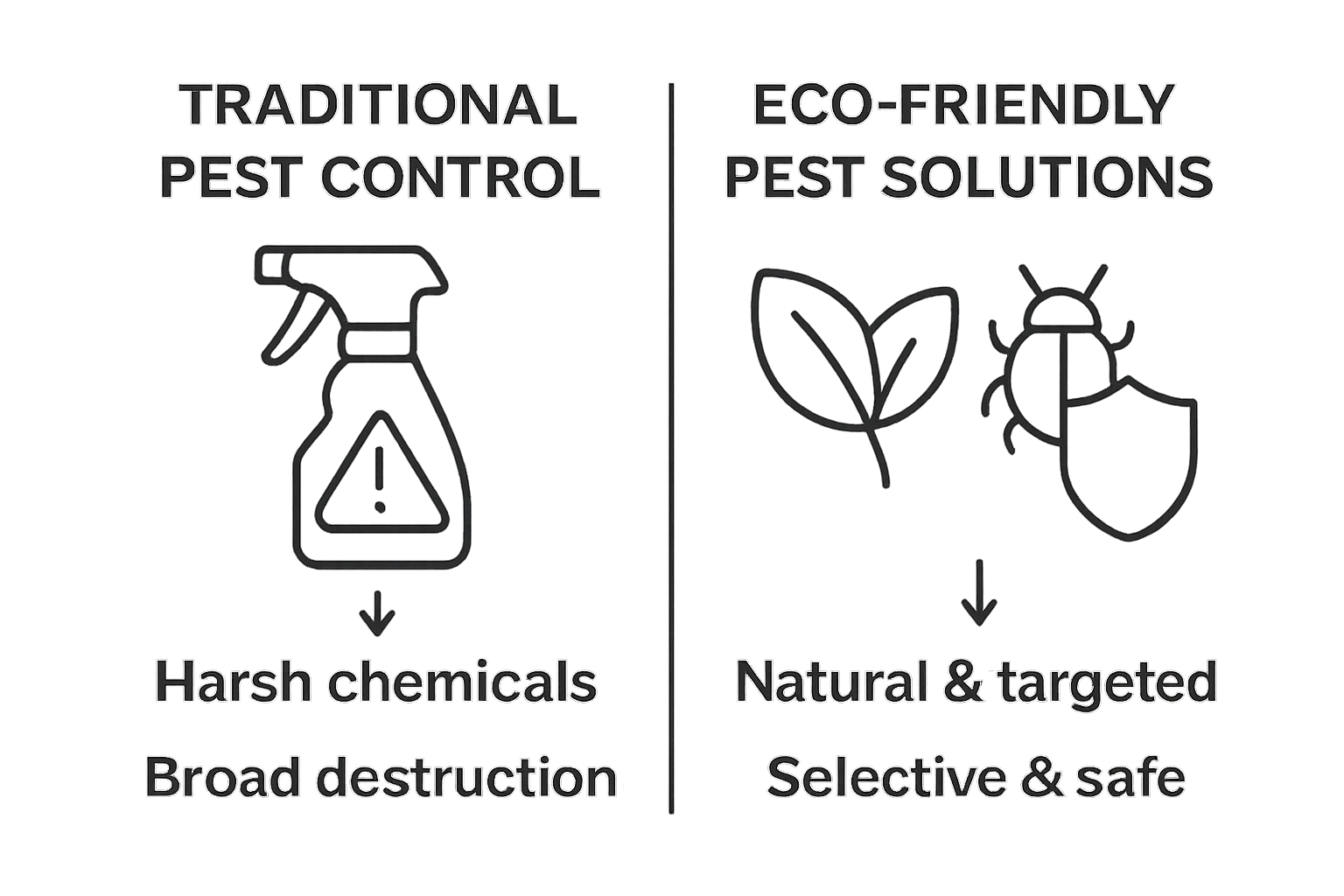 This approach requires a deep understanding of pest biology, habitat dynamics, and interaction with surrounding environments.
Strategic Decision-Making in Pest Control
Eco-friendly pest management involves a nuanced decision-making process that considers multiple factors. Professionals evaluate potential interventions based on effectiveness, environmental impact, and long-term sustainability. This means carefully selecting methods that:
- Cause minimal disruption to non-target organisms
- Utilize the least toxic intervention possible
- Create lasting deterrence rather than temporary solutions
- Support overall ecosystem health
Learn more about pest control safety for Texas homeowners and discover how these advanced strategies provide comprehensive protection for your living spaces. By embracing these sophisticated approaches, homeowners can achieve effective pest management while maintaining environmental responsibility.
Real-world Applications of Eco-friendly Pest Solutions
Eco-friendly pest solutions extend far beyond theoretical concepts, transforming how we approach pest management in residential, agricultural, and commercial environments. These innovative strategies demonstrate remarkable effectiveness across diverse settings, providing practical, sustainable alternatives to traditional chemical-based approaches.
Residential Pest Management Strategies
According to the Food and Agriculture Organization, eco-friendly pest control begins with understanding local ecosystem dynamics. In home environments, this translates to comprehensive strategies that include:
- Sealing potential entry points
- Removing attractant food sources
- Creating natural barriers using plant-based repellents
- Implementing strategic landscaping techniques
- Maintaining proper home hygiene and waste management
Homeowners can significantly reduce pest populations by making their living spaces less inviting to unwanted visitors through these targeted, environmentally conscious interventions.
Agricultural and Commercial Applications
Beyond residential settings, eco-friendly pest solutions have revolutionized agricultural and commercial pest management. These approaches focus on holistic ecosystem management rather than indiscriminate chemical treatments. Techniques include:
- Introducing beneficial predatory insects
- Utilizing crop rotation methods
- Implementing biological control agents
- Developing habitat diversity to disrupt pest reproduction
- Employing precision monitoring technologies
Learn more about safe pest control methods for Texas businesses to understand how these advanced strategies provide comprehensive, environmentally responsible protection across different contexts. By embracing these innovative approaches, we can effectively manage pest populations while preserving ecological balance.

Ready for a Healthier, Greener Home? Make the Eco-friendly Switch Today
Struggling with pests in your home can feel overwhelming, especially when you want solutions that are safe for your family and the planet. If you worry about harsh chemicals or exposing your loved ones to unnecessary risks, you are not alone. The article explained how eco-friendly pest strategies like prevention, targeted non-toxic methods, and Integrated Pest Management (IPM) work in harmony with nature while protecting your space. But putting theory into action can be daunting without the right local partner.

Let our family-owned team at Pestico bring you personalized, affordable, and environmentally responsible pest control. We use the latest science and the highest quality service to tackle pests, termites, mosquitoes, and rodents with minimal environmental impact. Want to know more? Explore our eco-friendly pest control methods or see why our safe pest control solutions are trusted by families across Texas. Take your first step toward a safer and greener home today with Pestico.
Frequently Asked Questions
What are eco-friendly pest solutions?
Eco-friendly pest solutions involve managing pest populations using sustainable methods that minimize harm to the environment and human health. These solutions focus on prevention, monitoring, and targeted interventions instead of relying solely on chemical treatments.
How do eco-friendly pest solutions work?
Eco-friendly pest solutions operate by assessing pest behavior and addressing the root causes of infestations. They employ strategies such as biological controls, habitat modifications, and minimal chemical treatments to effectively manage pests while protecting ecosystems.
What are the health benefits of using eco-friendly pest control methods?
Using eco-friendly pest control methods reduces exposure to toxic chemical residues that can cause health concerns, such as respiratory issues and skin irritations. These methods prioritize low-toxicity treatments that are safer for both humans and pets.
How can I implement eco-friendly pest management in my home?
To implement eco-friendly pest management, start by conducting a thorough inspection of your home to identify entry points and attractants. Use natural deterrents, seal potential access areas, maintain cleanliness, and consider introducing beneficial insects to disrupt pest populations.
Recommended
- Eco-Friendly Pest Control Methods For Texas Homes In 2025 – Pest Control Van Alstyne, TX – Pestico Pest Control
- Eco-Friendly Pest Control Methods – Pestico: Pest Control Services Near Me | Van Alstyne, TX
- Safest Pest Control Methods – Pest Control Van Alstyne, TX – Pestico Pest Control
- Are Pest Control Safe? What TX Homeowners & Businesses Need To Know In 2025 – Pest Control Van Alstyne, TX – Pestico Pest Control
- Understanding Eco Friendly Routines for Modern Families – The Zoofamily
- Understanding Eco-Friendly HVAC Solutions for Your Home – HVAC Service and Repair | Louisville, KY | Project Heating & Cooling